




21 Febbraio 2024 Aggiornamenti Standard
ASTM D8073; IP624
Defense Standard DEF STAN 91-091 now includes WSI-ASTM D8073, IP624 as an alternative test for water separation at the point of production.
JIG Bulletin 150 issued – the preferred method for testing fuels containing a static dissipative additive (SDA) downstream from the point of production is now WSI-ASTM D8073, IP624. ASTM D1655 permits the use of WSI-ASTM D8073 as a downstream test for fuels.
We are pleased to announce the inclusion of ASTM D8073 in DEF STAN 91-091 Edition 16, Table 5 as an alternative
to ASTM D3948 for measuring water separation in aircraft turbine fuels at the point of production.
JIG Bulletin 150 has now been released with updated information on the use of ASTM D8073, IP624 and confirming that:
The preferred method for testing fuels containing a static dissipative additive [SDA] downstream from the point of production is ASTM D8073
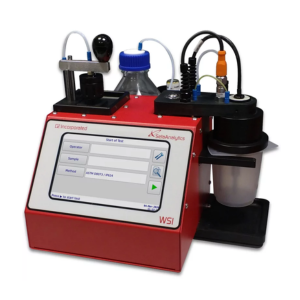
For fuels containing an SDA the preferred method is ASTM D8073 and ASTM D7224 is not recommended. WSI is a fully automated instrument using state-of-the-art filter media.
INot only is the WSI test quick, operators require no special training; all they have to do is insert the sample and the rest of the procedure is completely automated. More importantly, there’s no time wasted rerunning tests or trying to understand the results, as the instrument displays a clear result and an easy-to-read graph.
WSI’s fully automated, “right-first-time” approach, combined with substantial cost savings in test consumables and field calibration capabilities, offers significant savings to refineries and test laboratories. Additionally, the WSI instrument ensures that fuel water separation characteristics are accurately reported.
Basic Informations
Water separation in jet fuel is measured as a key quality assurance indicator throughout the supply chain, from the refinery to the aircraft. Surfactants or surface-active agents in the fuel can affect the ability of filters in the distribution network to remove water entrained through coalescence.
The ability of fuel to remove water is known as its water separation characteristic. Measuring this property is important because it determines whether the fuel in question contains materials that disarm or deactivate filters. Aircraft turbine fuel specifications, including DEF STAN 91-091 and ASTM D1655, require surfactant testing.
ASTM D8073 and IP 624 test methods provide a fuel sample classification by reporting a Water Separation Index (WSI) classification number. The WSI classification uses the same surfactant scale as the existing characteristic water separation methods ASTM D3948 and ASTM D7224. ASTM D8073 was published in 2016 and supports the innovative WSI instrument (SA9000-0) manufactured by Stanhope-Seta and D-2 Incorporated.
The WSI instrument has undergone the most comprehensive testing ever conducted on water separation instrumentation, demonstrating a near 100% accuracy rate in determining the separation characteristics of aircraft turbine fuels.
The ASTM D8073 test method and WSI instrument provide a simple alternative to legacy methods that are widely recognized as highly variable and, in some cases, require repeated and additional testing to confirm results.
Not only is the WSI test quick, operators require no special training; all they have to do is insert the sample and the rest of the procedure is completely automated. More importantly, there’s no time wasted rerunning tests or trying to understand the results, as the instrument displays a clear result and an easy-to-read graph.
WSI’s fully automated, “right-first-time” approach, combined with substantial cost savings in test consumables and field calibration capabilities, offers substantial savings to refineries and test houses. Additionally, the WSI instrument ensures that fuel water separation characteristics are accurately reported.